ITRHD Observes Rural Tourism Day on Mahatma Gandhi’s Death Anniversary, Emphasises Agritourism for Sustainable Rural Development

The Indian Trust for Rural Heritage and Development (ITRHD) observed Rural Tourism Day on Friday by paying homage to Mahatma Gandhi on his death anniversary at an event organised at the World Wide Fund for Nature (WWF) office in New Delhi. The annual observance seeks to promote sustainable rural development rooted in Gandhian ideals of village self-reliance. The event was attended by ITRHD Chairman S.K. Misra, agritourism pioneer Pandurang Taware, architect and urban planner A.G. Krishnan Menon, and development professional Maureen Libel. Pandurang Taware, widely regarded as the Father of…

Read More

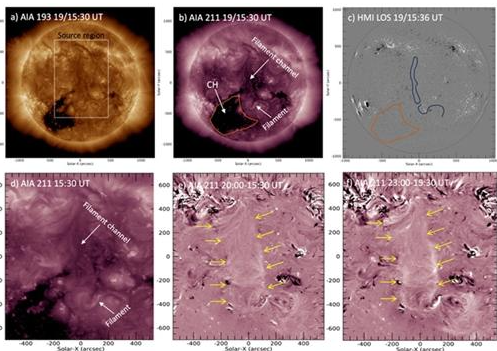
Indian astronomers Trace Major Geomagnetic Storm to Minor Solar CMEs

An intense geomagnetic storm that recently impacted Earth has drawn scientific attention to the underestimated role of subtle solar eruptions, challenging the long-held belief that only massive solar blasts can significantly disturb space weather. Researchers say the storm was triggered by a series of relatively weak coronal mass ejections (CMEs)—clouds of magnetised plasma released from the Sun—that, despite their modest appearance, interacted in a way that amplified their impact on Earth’s magnetosphere. The event led to temporary disturbances in satellite operations, radio communications, and navigation systems, while also enhancing auroral activity…

Read More

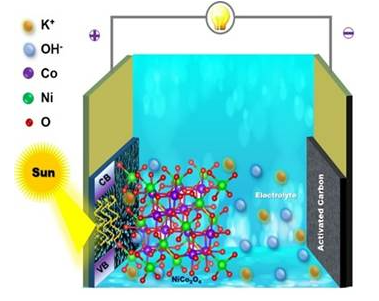
Indian Scientists Develop World‑First Self‑Charging Device Powered Solely by Sunlight

In a major boost to India’s clean-energy research, Indian scientists have developed a self-charging energy storage device that can directly harvest and store solar energy, eliminating the need for separate solar panels and batteries. The innovation is expected to pave the way for compact, efficient and sustainable power solutions for future electronics and off-grid applications. The device has been developed by researchers at the Centre for Nano and Soft Matter Sciences (CeNS), Bengaluru, an autonomous institute under the Department of Science and Technology (DST). Described as a photo-rechargeable supercapacitor, the technology combines energy conversion…

Read More

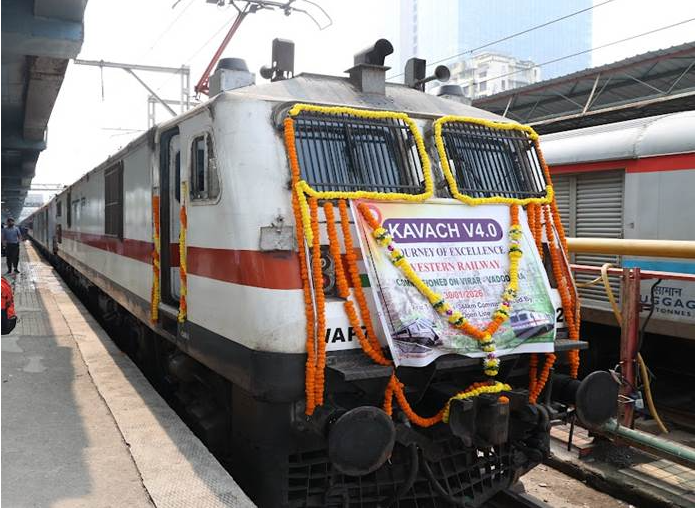
Indian Railways Fast-Tracks Kavach, Commissions 472 km on Key Routes

Indian Railways has significantly accelerated the deployment of its indigenous Automatic Train Protection system, Kavach Version 4.0, by commissioning 472 route kilometres (RKm) across three key sections of the network in a single rollout. This marks the largest commissioning of Kavach in one phase, underscoring the Railways’ push to strengthen operational safety on high-density routes. The newly commissioned sections include the Vadodara–Virar section (about 344 km) on Western Railway, a critical part of the Delhi–Mumbai corridor; the Tughlakabad Junction Cabin–Palwal section (around 35 km) on Northern Railway; and the Manpur–Sarmatanr section (about 93 km) on East Central Railway, which lies…

Read More