
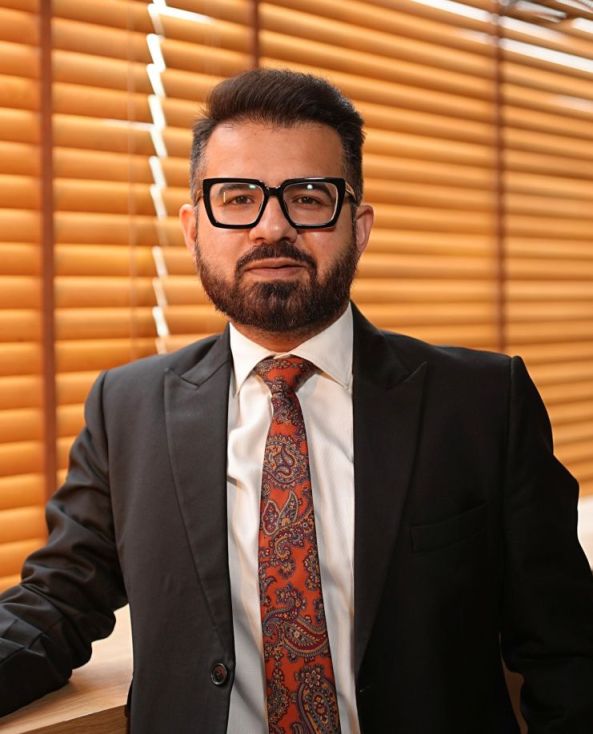
Closing India’s Leadership Talent Gap: A Conversation with Raghav Choudhary

Boardrooms across the world are quietly grappling with the same question. Where does the next generation of leadership come from. A recent global talent shortage study found over seven in ten employers now struggle to find the talent they need, and leadership roles sit right at the center of that struggle.

India tells a more complex version of this story. Eleven Fortune 500 companies are currently led by CEOs of Indian heritage, together commanding over seven trillion dollars in combined market capitalization. Yet inside India itself, senior leadership roles across sectors like Technology, BFSI, and GCCs remain some of the hardest mandates to close. We sat down with Raghav Choudhary, Founder and Managing Director of Crescendo Global, to understand what is really happening beneath the surface of India's leadership talent story.

There's a lot of talk about a global leadership talent crisis. What does that actually look like inside India right now?

It is a contradiction, and companies need to stop pretending otherwise. India is producing the most sought-after leadership talent in the world right now, yet at Crescendo Global, we watch senior mandates take longer to close every single year. The truth is simple. Every company wants the same fifty people who combine deep functional depth with the judgment to lead through uncertainty, and that talent takes a decade to build, well beyond a single hiring cycle. Companies that keep treating leadership hiring like a transaction will keep losing this race.

Indian-origin executives are now leading some of the world's biggest tech companies. Why is that happening at this scale?

Indian tech leaders build their careers across sharply different environments early, a startup, a large enterprise, often a stint abroad, and that builds comfort with ambiguity that cannot be manufactured in a leadership training program. Research backs this up too. Indian-origin leaders take calculated risks more often and handle complex, messy problems better than most global peers. Pair that risk appetite with strong engineering fundamentals, and the outcome is obvious. Global boards used to take a chance on Indian leadership. Today they are actively seeking it out.

How does this play out inside India's own tech and GCC hiring right now?

This is where most companies get it wrong. Global capability centers used to import leadership from headquarters, treating India as an execution hub. That model is dead. GCCs are now building engineering heads, product VPs, and country CTOs locally, because global boards have realized the strongest leadership judgment already sits inside their India teams. At Crescendo Global, we see the same intensity in BFSI, where insurance and fintech firms are fighting for the same narrow pool of risk and underwriting leaders. Any company still treating India as a delivery center rather than a leadership hub is already behind.

What actually separates someone who makes it to a senior leadership seat from someone who stalls a level

A strong resume gets someone into the room. What decides whether they get promoted past that room shows up in one specific moment our consultants at Crescendo Global are trained to listen for, how a candidate describes a decision they made without enough data. Weak leaders describe the process they followed. Strong leaders describe the trade-off they accepted and what they were willing to lose if it went wrong.

Across the leadership mandates we run at Crescendo Global, our team keeps seeing the same pattern play out. Three markers consistently separate someone who breaks into a senior seat from someone who stalls a level below. First, they have already led something without formal authority, a cross-functional project, a client escalation nobody wanted, before anyone gave them a title for it. Second, when a bet goes wrong, they can tell you exactly what they would do differently, instead of only what went wrong. Third, they talk about the business in outcomes, revenue protected, a team retained through a hard quarter, instead of just responsibilities held.

Everyone else has an impressive resume and a story about waiting for the right opportunity. The professionals who actually make it stopped waiting a long time ago.

Where do you see India's GCC and leadership talent story heading over the next five years?

India stops being a talent exporter and becomes a genuine leadership hub in its own right, and the numbers already point that way. India hosts over 2,100 GCCs today, generating close to 98 billion dollars in revenue, and more than 500 Forbes Global 2000 companies now run a GCC out of India. That number is projected to cross 2,500 centers and 110 billion dollars in revenue by 2030. Global leadership roles created out of India GCCs have grown at a 40 percent compound rate over the last five years, a trend our team at Crescendo Global has watched build quietly for a while now, and that pace is not slowing down.

Microsoft's recent 17.5 billion dollar commitment to India through 2029 is a clear signal of what is coming. These are not back-office investments, they fund AI infrastructure, skilling, and leadership capability built and owned locally. GCCs are moving from execution centers to genuine decision-making centers, and BFSI institutions are following the same path, building leadership pipelines internally instead of importing them from outside. We track this shift closely across every mandate at Crescendo Global, and the pattern is unmistakable. Companies that start identifying and developing this talent today will own the next decade of leadership in India. Companies that wait will be competing for scraps.

And how does Crescendo Global fit into solving this?

This is the exact gap Crescendo Global was built to close. Over twelve years, we have worked with organizations across Technology, BFSI, Analytics, GCCs, Consumer, Consulting, Industrial Engineering, and Healthcare to place leaders who genuinely move a business forward, well beyond professionals who simply fill a title. What sets Crescendo Global apart is conviction backed by data. We track hiring patterns, compensation shifts, and leadership readiness signals across these sectors year round, long before a mandate ever opens, which means we already know who the right leader is before most companies even start looking. Twelve years of relationships across India's senior talent pool, paired with that market intelligence, is what lets Crescendo Global close leadership mandates with a precision generic recruitment cannot come close to matching.

Raghav Choudhary is the Founder and Managing Director of Crescendo Global, a mid to senior talent recruitment firm with pan-India and USA presence, specializing in BFSI, Technology, Analytics, GCCs, Consumer, Consulting, Industrial Engineering, and Healthcare hiring.

 

Related posts

Closing India’s Leadership Talent Gap: A Conversation with Raghav Choudhary

Boardrooms across the world are quietly grappling with the same question. Where does the next generation of leadership come from. A recent global talent shortage study found over seven in ten employers now struggle to find the talent they need, and leadership roles sit right at the center of that struggle.

India tells a more complex version of this story. Eleven Fortune 500 companies are currently led by CEOs of Indian heritage, together commanding over seven trillion dollars in combined market capitalization. Yet inside India itself, senior leadership roles across sectors like Technology, BFSI, and GCCs remain some of the hardest mandates to close. We sat down with Raghav Choudhary, Founder and Managing Director of Crescendo Global, to understand what is really happening beneath the surface of India's leadership talent story.

There's a lot of talk about a global leadership talent crisis. What does that actually look like inside India right now?

It is a contradiction, and companies need to stop pretending otherwise. India is producing the most sought-after leadership talent in the world right now, yet at Crescendo Global, we watch senior mandates take longer to close every single year. The truth is simple. Every company wants the same fifty people who combine deep functional depth with the judgment to lead through uncertainty, and that talent takes a decade to build, well beyond a single hiring cycle. Companies that keep treating leadership hiring like a transaction will keep losing this race.

Indian-origin executives are now leading some of the world's biggest tech companies. Why is that happening at this scale?

Indian tech leaders build their careers across sharply different environments early, a startup, a large enterprise, often a stint abroad, and that builds comfort with ambiguity that cannot be manufactured in a leadership training program. Research backs this up too. Indian-origin leaders take calculated risks more often and handle complex, messy problems better than most global peers. Pair that risk appetite with strong engineering fundamentals, and the outcome is obvious. Global boards used to take a chance on Indian leadership. Today they are actively seeking it out.

How does this play out inside India's own tech and GCC hiring right now?

This is where most companies get it wrong. Global capability centers used to import leadership from headquarters, treating India as an execution hub. That model is dead. GCCs are now building engineering heads, product VPs, and country CTOs locally, because global boards have realized the strongest leadership judgment already sits inside their India teams. At Crescendo Global, we see the same intensity in BFSI, where insurance and fintech firms are fighting for the same narrow pool of risk and underwriting leaders. Any company still treating India as a delivery center rather than a leadership hub is already behind.

What actually separates someone who makes it to a senior leadership seat from someone who stalls a level

A strong resume gets someone into the room. What decides whether they get promoted past that room shows up in one specific moment our consultants at Crescendo Global are trained to listen for, how a candidate describes a decision they made without enough data. Weak leaders describe the process they followed. Strong leaders describe the trade-off they accepted and what they were willing to lose if it went wrong.

Across the leadership mandates we run at Crescendo Global, our team keeps seeing the same pattern play out. Three markers consistently separate someone who breaks into a senior seat from someone who stalls a level below. First, they have already led something without formal authority, a cross-functional project, a client escalation nobody wanted, before anyone gave them a title for it. Second, when a bet goes wrong, they can tell you exactly what they would do differently, instead of only what went wrong. Third, they talk about the business in outcomes, revenue protected, a team retained through a hard quarter, instead of just responsibilities held.

Everyone else has an impressive resume and a story about waiting for the right opportunity. The professionals who actually make it stopped waiting a long time ago.

Where do you see India's GCC and leadership talent story heading over the next five years?

India stops being a talent exporter and becomes a genuine leadership hub in its own right, and the numbers already point that way. India hosts over 2,100 GCCs today, generating close to 98 billion dollars in revenue, and more than 500 Forbes Global 2000 companies now run a GCC out of India. That number is projected to cross 2,500 centers and 110 billion dollars in revenue by 2030. Global leadership roles created out of India GCCs have grown at a 40 percent compound rate over the last five years, a trend our team at Crescendo Global has watched build quietly for a while now, and that pace is not slowing down.

Microsoft's recent 17.5 billion dollar commitment to India through 2029 is a clear signal of what is coming. These are not back-office investments, they fund AI infrastructure, skilling, and leadership capability built and owned locally. GCCs are moving from execution centers to genuine decision-making centers, and BFSI institutions are following the same path, building leadership pipelines internally instead of importing them from outside. We track this shift closely across every mandate at Crescendo Global, and the pattern is unmistakable. Companies that start identifying and developing this talent today will own the next decade of leadership in India. Companies that wait will be competing for scraps.

And how does Crescendo Global fit into solving this?

This is the exact gap Crescendo Global was built to close. Over twelve years, we have worked with organizations across Technology, BFSI, Analytics, GCCs, Consumer, Consulting, Industrial Engineering, and Healthcare to place leaders who genuinely move a business forward, well beyond professionals who simply fill a title. What sets Crescendo Global apart is conviction backed by data. We track hiring patterns, compensation shifts, and leadership readiness signals across these sectors year round, long before a mandate ever opens, which means we already know who the right leader is before most companies even start looking. Twelve years of relationships across India's senior talent pool, paired with that market intelligence, is what lets Crescendo Global close leadership mandates with a precision generic recruitment cannot come close to matching.

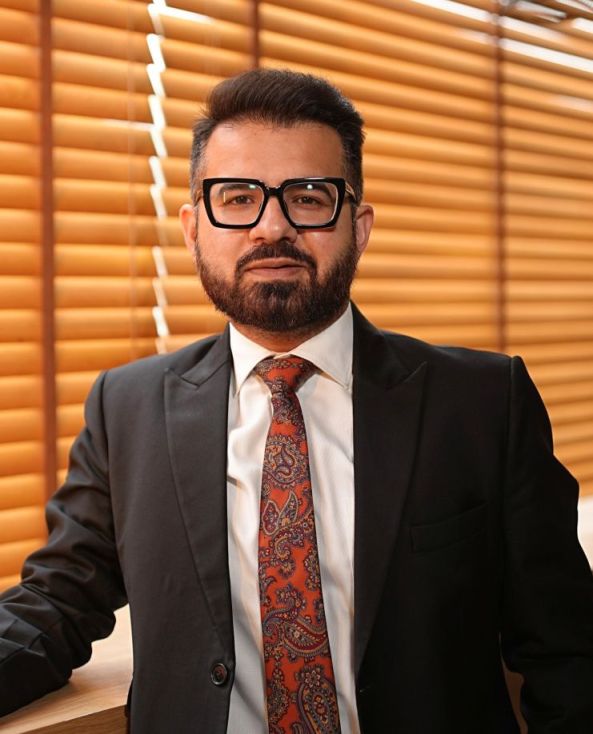
Raghav Choudhary is the Founder and Managing Director of Crescendo Global, a mid to senior talent recruitment firm with pan-India and USA presence, specializing in BFSI, Technology, Analytics, GCCs, Consumer, Consulting, Industrial Engineering, and Healthcare hiring.

 

Related posts