ICAR partners with NDDB to strengthen agri research ecosystem
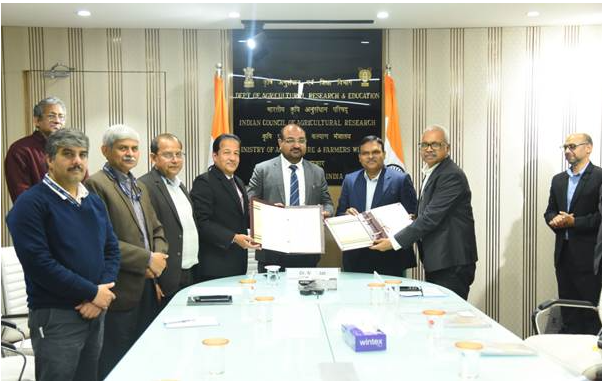
The Indian Council of Agricultural Research (ICAR) and the National Dairy Development Board (NDDB) have entered into a strategic alliance to strengthen collaboration in research, innovation and extension activities across the agriculture and dairy sectors.   The partnership aims to leverage the scientific expertise and institutional strengths of both organisations to enhance productivity, sustainability and technology adoption. Under the alliance, ICAR and NDDB will work together on joint research programmes, capacity building, technology development, and effective dissemination of innovations to farmers and stakeholders.   The collaboration is expected to accelerate…

Read More

India successfully flight-tests MPATGM with top-attack capability

Third Generation Fire & Forget Man Portable Anti-Tank Guided Missile (MPATGM) with top attack capability was flight-tested successfully against a moving target in KK Ranges, Ahilya Nagar, Maharashtra by DRDO’s Defence Research & Development Laboratory, Hyderabad on January 11, 2026. The indigenously developed MPATGM consists of state-of-the-art indigenous technologies like Imaging Infrared (IIR) Homing Seeker, all electric Control Actuation System, Fire Control System, Tandem Warhead, propulsion system and high performance sighting system, which are developed by DRDO’s sister laboratories namely Research Centre Imarat, Hyderabad, Terminal Ballistics Research Laboratory, Chandigarh, High…

Read More

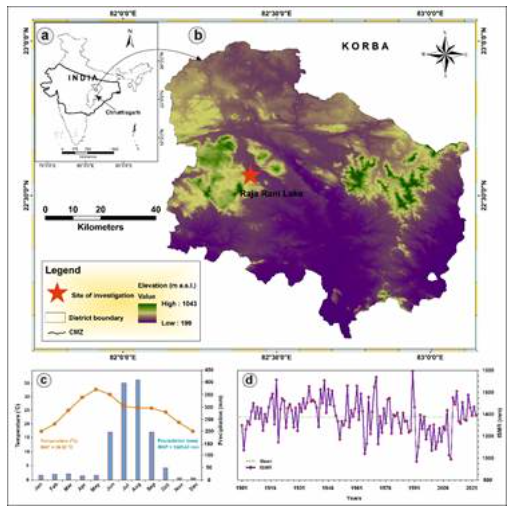
Indian Scientists studied ancient pollen grains preserved in the sediment of Raja Rani Lake

India may have faced a much stronger monsoon than earlier believed. Scientists have found evidence of intense rainfall, rain, forests, and climate change roughly between 1,060 and 1,725 CE in central India hidden in the Raja Rani Lake of Korba district of Chhattisgarh. Understanding the vegetation dynamics and corresponding hydro-climate variability from the Core Monsoon Zone (CMZ), wherein the rainfall is essentially controlled by the ISM which contributes to 89 to 90 percent of India’s rainfall, could be crucial in understanding the monsoonal variability during the Late Holocene (Meghalayan Age) particularly as the CMZ is sensitive to ISM fluctuations.…

Read More